Adding a chemical in swimming pool water is only effective when it’s given enough time to circulate, activate, and stabilize. Many pool owners add chemicals and immediately test again—only to see confusing or inaccurate results.
Understanding how long each chemical takes to work helps prevent cloudy water, algae growth, and unnecessary re-dosing. This guide explains what happens after chemicals are added and when testing will give you reliable readings.
Why Timing Matters After Adding Chemical in Swimming Pool Water
Every chemical in swimming pool water behaves differently once introduced. Some begin working almost immediately, while others need hours to fully dissolve and balance throughout the system.
Accurate results depend on consistent circulation, correct placement, and allowing enough time before retesting. Testing too soon can show that nothing changed—even though the process has already started.
How Long Common Pool Chemicals Take to Work
Chlorine (Liquid, Granular, or Tablets)
- Activation time: 30–60 minutes
- Retest window: 1–2 hours
Chlorine is the primary sanitizer and the most important chemical in swimming pool care. Liquid chlorine disperses fastest, while tablets dissolve more slowly. Proper circulation ensures even distribution and consistent sanitation.
Pool Shock
- Activation time: 4–8 hours
- Retest window: 12–24 hours
Shock treatments raise chlorine levels rapidly to eliminate contaminants. Because levels spike temporarily, testing should wait until the chlorine returns to a normal operating range.
pH Reducer
- Activation time: 30–60 minutes
- Retest window: 1–2 hours
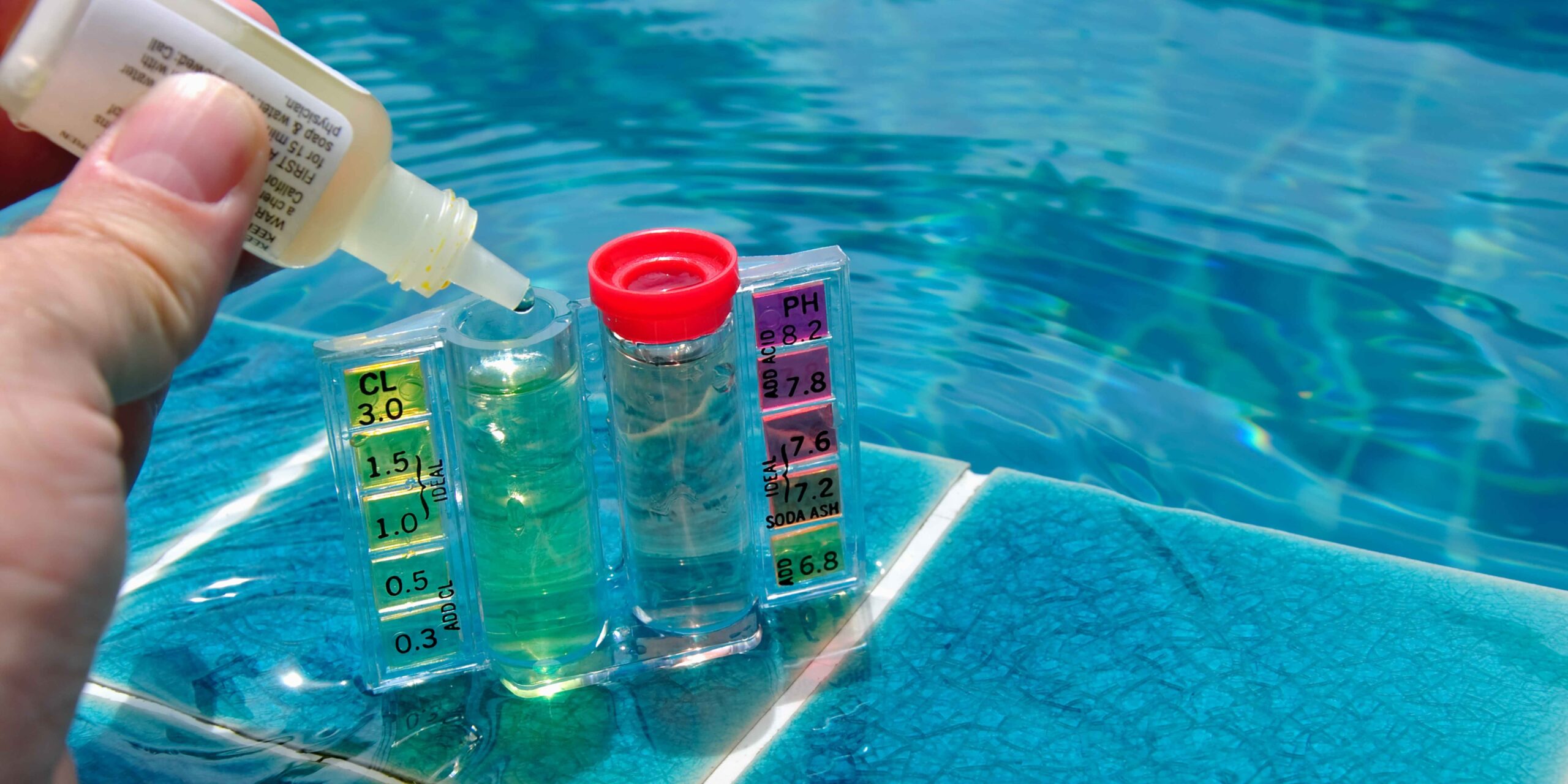
Lowering pH improves chlorine effectiveness. Even if chlorine levels are correct, an unbalanced pH can reduce how well a chemical in swimming pool water performs.
pH Increaser
- Activation time: 1–2 hours
- Retest window: 2–4 hours
This chemical works more gradually and should be measured carefully to avoid pushing pH too high.
Alkalinity Adjuster
- Activation time: 4–6 hours
- Retest window: 6–24 hours
Alkalinity stabilizes pH and helps prevent rapid chemical swings. Because it affects the entire system, readings become accurate only after extended circulation.
Calcium Hardness Increaser
- Activation time: 6–8 hours
- Retest window: 24 hours
Calcium dissolves slowly and should be retested the following day for accurate results.
Correct Order for Adding Chemical in Swimming Pool Water
When more than one chemical in swimming pool adjustment is needed, adding them in the correct order prevents interference and improves effectiveness. Always disperse chemicals evenly across the pool surface with the pump running.
Recommended order:
- Alkalinity
- pH
- Calcium hardness
- Chlorine or sanitizer
Following this sequence allows each chemical to support the next rather than working against it.
When Is It Safe to Swim After Adding Pool Chemicals?
Swimming safety depends on both chemical type and test results:
- Routine adjustments typically allow swimming after 30 minutes to 2 hours
- Shock treatments require 12–24 hours and confirmed safe chlorine levels
Never rely on time alone—always confirm readings before swimming.
Why Testing Results Can Still Look Incorrect
Even when added properly, a chemical in swimming pool water may appear ineffective if:
- Circulation is poor
- Chemicals were added too quickly in one area
- Testing was done before full mixing
- The pool volume was miscalculated
Consistent circulation and patience are key to accurate results.
Frequently Asked Questions About Chemical in Swimming Pool Care
How long does a chemical in swimming pool water need to circulate before testing?
Most chemicals require at least 30 minutes to several hours of circulation before testing provides reliable readings. Larger adjustments may take up to 24 hours to stabilize.
Why shouldn’t I test immediately after adding chemical in swimming pool water?
Testing too soon often measures localized water conditions instead of the full pool, leading to inaccurate or misleading results.
Can different chemicals cancel each other out?
Yes. Improper order or uneven distribution can reduce effectiveness, which is why sequencing and even dispersal matter.
Does warm weather affect how chemical in swimming pool water works?
Higher temperatures and sunlight can cause chemicals—especially chlorine—to dissipate faster, increasing the need for careful timing and monitoring.
Is clear pool water always chemically balanced?
No. A pool can appear clean while still having unsafe or ineffective chemical levels. Testing is the only reliable indicator.
Final Takeaway
Every chemical in swimming pool maintenance routine depends on timing, order, and circulation. Giving chemicals enough time to work—and knowing when to retest—prevents unnecessary adjustments and keeps water safe and stable.
If chemical balance becomes inconsistent or difficult to manage, professional pool service can help maintain proper levels while extending the life of your equipment.